WeLockIn
Building the focus tool I wanted as a student.
- Student beta testers
- 20+
- Available platforms
- Desktop + iOS
- Marketing team
- 4 people
During my first year at university, I spent a lot of time trying to get into a good working rhythm. Once I was focused, I could get through difficult material and enjoy the work. Getting there was the hard part. A notification or a quick look at my phone could interrupt a session before it had really started.
My friend and I kept coming back to that problem. We had already built TunisianPass together. This time, we were building for people whose daily routine we knew closely: students like us.
Starting with the way we studied
Engineering studies ask for long periods of concentration. We also study together, plan our weeks around classes and share our progress with friends. Those habits shaped our idea of a focus app. We wanted a product that fitted university life and remained affordable for students.
We looked at existing tools and talked to students about their own routines. The conversations helped us work out which situations deserved attention: preparing a work session, staying in it and making space for group study. We wanted students to recognise their own needs in the product.
Making a commitment before temptation arrives
One request kept making sense to us: let me choose to concentrate, then help me stick to that choice. Students often know what they need to do. Having an easy way out of a restriction can still make it difficult to follow through.
That thinking led to our hard lock mode. The student chooses a session and its restrictions in advance. The mode is designed to keep those restrictions in place until the session ends. We have worked on that commitment across the desktop and iOS experience, while adapting to what each platform allows.
A summer spent asking and testing
A large part of the summer went into research. We compared approaches, designed interfaces and put versions in front of students. More than 20 beta testers tried the app, including students from EPFL, Imperial College London, Polytechnique Montréal and École Polytechnique, as well as students in Zurich.
Their feedback gave us different study habits to design around. We revisited the user experience and tested our choices again. I learned how much attention a small interaction can need when someone is trying to start a demanding piece of work.
I was also learning to use AI tools in the development process. That brought its own questions about how to review the output and keep control of product decisions. The research and design work needed my judgment throughout.
Taking the app through to release
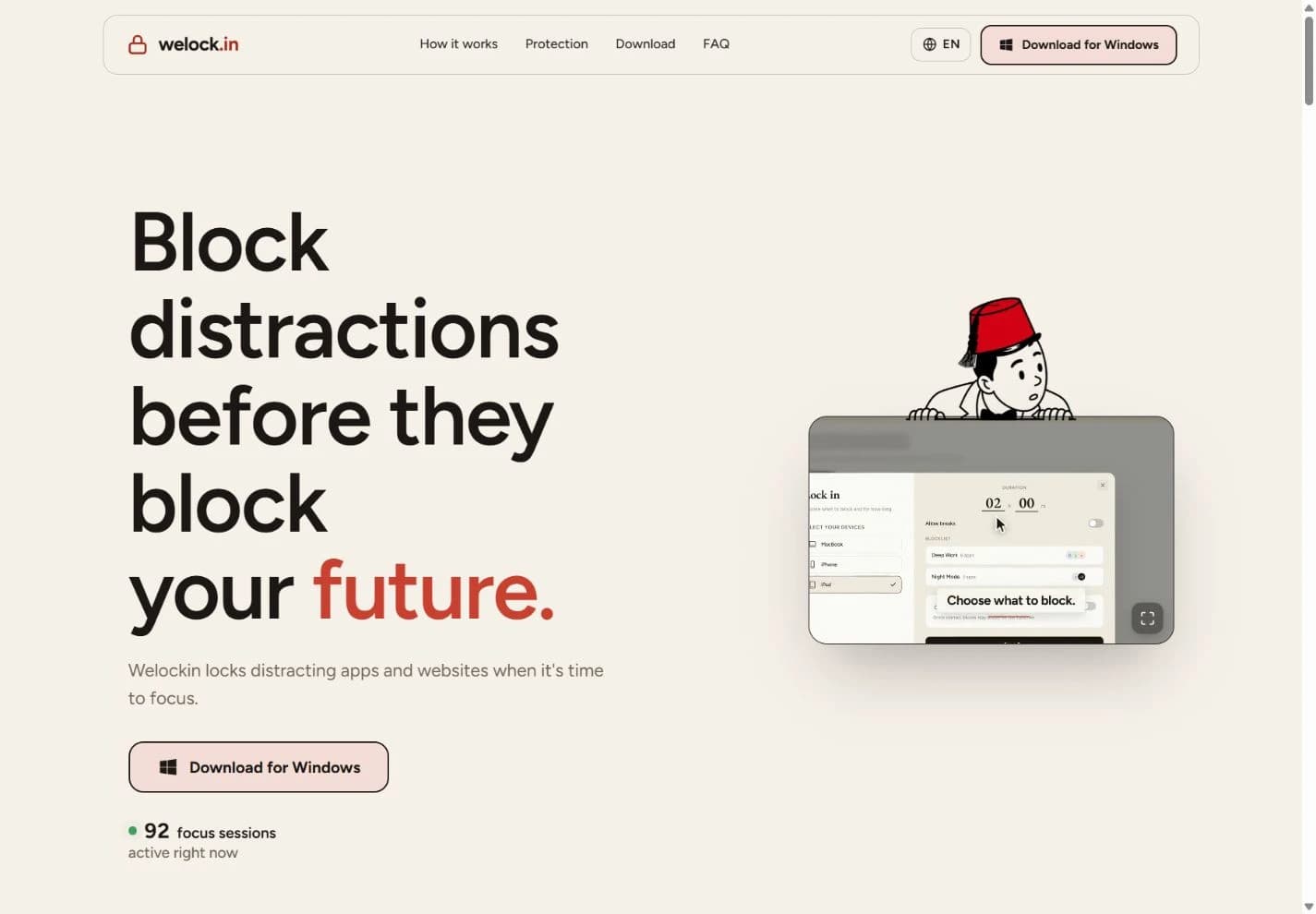
WeLockIn became a desktop app and an iOS app. The website introduces the product and its platforms. The iOS version is available on the App Store; an Android version is not available yet.
This was my first iOS product with paid features. Preparing it for release meant learning about payments and Apple's review process, alongside the usual work on the app itself. It took repeated exchanges and revisions to reach a version we could put into production.
Learning how to reach other students
We were learning marketing at the same time. We filmed videos, tried different formats and explored both organic and paid distribution. Watching those experiments helped us understand which ways of presenting the app connected with students.
Our marketing team now has four people. We have been testing content for audiences in France, Germany and Turkey, with Switzerland also in progress. That work is still experimental. We are learning where to spend our effort as we go.
Keeping the feedback loop open
WeLockIn is still developing. Testers report issues, we try to reproduce them and we prepare fixes. Students continue to try the app and share it within their universities. Progress comes through those conversations and the patches that follow.
I am proud of the time we have given to understanding the people who use it. Being a student gave me a starting point. Listening to other students keeps showing me what I had missed.
Looking back
What I am taking from WeLockIn
WeLockIn has taught me to stay with a problem through research, release and support. I enjoy building the app, and I have come to value the slower work of testing an assumption with someone else. That is the part of this project I want to carry into whatever I build next.